

Why the strongest communities are not built from the outside in
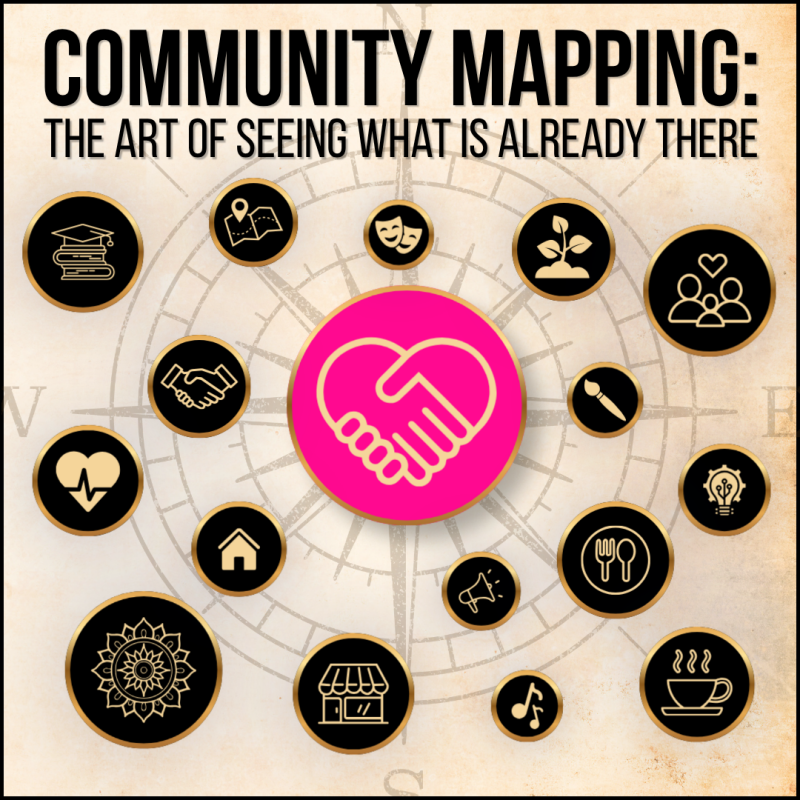
Before an artist creates a mural, they study the wall.
They notice the texture. The cracks. The history. The layers of paint that came before. They consider what belongs in that space and what story the community is already telling.
Community works the same way.
Yet organizations often approach community engagement as if they are standing in front of a blank canvas.
“What event should we create?”
“How do we increase engagement?”
“How do we get more people involved?”
“How do we reach a more diverse audience?”
Important questions, certainly.
But sometimes we start one step too late.
Before we build for a community, we have to understand the community that already exists.
Because communities are not empty spaces waiting for someone to arrive with a clipboard, a branding guide, and a very enthusiastic PowerPoint presentation.
(Though, to be fair, the clipboard has tried. It has a very strong work ethic.)
Communities are living, breathing ecosystems. They already have storytellers, connectors, organizers, artists, caregivers, advocates, and unofficial historians who know the heartbeat of a place because they have been listening to it for years.
The work is not always creating community.
Often, the work is learning how to recognize it.
The Difference Between Entering a Community and Belonging to One
One of the most important lessons I have learned through years of working in arts, culture, and community spaces is this:
The people who know a community best are usually the people already invested in it.
They are not always the people with the loudest platforms.
They may be:
- The person who has organized neighborhood gatherings for ten years
- The small business owner who knows everyone who walks through their door
- The volunteer who remembers every child’s name at an event
- The artist documenting stories nobody else noticed
- The community member who quietly connects people behind the scenes
These people are not “stakeholders” in some distant strategic planning document.
They are the living infrastructure.
They are the threads holding the fabric together.
Organizations often search for ways to “reach” communities while overlooking the people who are already deeply connected to them.
The question shifts from:
“How do we get this community to engage with us?”
to:
“How can we listen to, support, and collaborate with the people who are already creating connection?”
That is where meaningful engagement begins.
Community Is Not a Demographic
A common mistake organizations make is confusing a community with a category.
Age range.
Income bracket.
Zip code.
Customer segment.
Social media audience.
Useful information? Absolutely.
But a spreadsheet cannot tell you what makes people feel welcome.
A demographic profile can tell you who lives somewhere.
It cannot always tell you:
- What traditions matter
- Who people trust
- Where conversations happen
- What barriers exist
- What stories have been overlooked
- What dreams people are already carrying
A community is not just who people are.
It is how they connect.
The Artist’s Approach: Observe Before You Create
Artists understand something that businesses can borrow:
You do not create meaningful work by ignoring context.
You create by paying attention.
Before making something new, artists ask:
- Who is already here?
- What have they created?
- What stories are waiting to be told?
- What voices have not been heard?
- What materials are available?
- What might emerge if we create space?
Organizations can apply the same approach.
Before launching a new initiative, consider:
Who is already doing this work?
Who is already trusted?
Who understands the nuance that cannot be found through research alone?
Who should have a seat at the table before the table is built?
Or rather, who has already built the table, and what can you do to support them?
The Power of Community Connectors
Every community has connectors.
They are the people who know where the energy lives.
They know:
- Which local organizations are truly active
- Which conversations are happening
- Which spaces feel welcoming
- Which groups are missing from the room
- What support would actually make a difference
The mistake organizations sometimes make is trying to become the center of the community.
The better opportunity?
Become a meaningful part of the ecosystem.
A healthy ecosystem does not have one tree demanding all the sunlight.
It thrives because many things grow together.
Building With Communities, Not Just For Them
The strongest partnerships happen when organizations stop asking:
“What can we provide?”
and start asking:
“What can we build together?”
That difference is enormous.
Building for a community can unintentionally create assumptions.
Building with a community creates ownership.
It invites:
- shared ideas
- shared responsibility
- shared success
It recognizes that the people closest to an experience often hold the wisdom needed to improve it.
A More Honest Way to Measure Engagement
Many organizations measure community engagement through numbers:
- Attendance.
- Followers.
- Registrations.
- Sales.
- Clicks.
Those numbers matter.
But community has another kind of currency.
Trust. Connection. Belonging.
Consider asking:
- Did people return?
- Did new relationships form?
- Did people feel represented?
- Did someone discover a new opportunity?
- Did a person who usually stays on the sidelines find a doorway in?
- Did the community become stronger because we showed up?
Because the goal is not simply getting people into the room.
The goal is creating a room where people know they belong.
A Small Challenge
Before your next meeting, campaign, strategic plan, or community initiative, try one thing:
Ask, "Who isn't in this room that should be?"
Then ask, "Who is already doing this work, and how can we support them?"
The answers may change not only your next project, but the relationships that make it possible.
If this perspective resonates with you, I'd love to continue the conversation. You'll find more essays on creativity, collaboration, and the creative infrastructure of community at www.wildimaginarium.com.
Here's to listening before leading, partnering before prescribing, and remembering that the strongest communities are rarely built from the outside in. They're cultivated by the people who have been there all along.
May we have the wisdom to notice them, the humility to learn from them, and the courage to build alongside them.
Add comment
Comments